Historic Properties of Spokane
Inland Auto Freight Depot
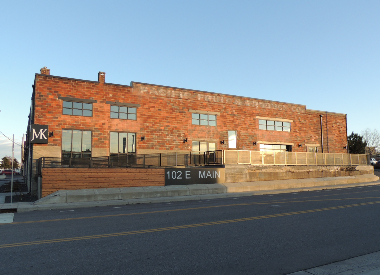
The Inland Auto Freight building, constructed in 1922, remains as one of the few buildings that speaks to the once bustling industrial and warehouse district that operated on the north side of the Northern Pacific Railway tracks east of downtown. The building’s triangular shape is a direct response to the location of the railroad tracks, with the building’s slanted elevation parallel to the tracks. The Inland Auto Freight building is significant for its association with Spokane’s prominence as the regional shipping center for the Inland Empire and the development of the East Riverside neighborhood around the Northern Pacific Railway’s freight depot to support this responsibility. As a freight depot constructed adjacent to the railroad, the Inland Auto Freight building illustrates the shift towards auto-dominated freight in shipping, particularly to transport goods to smaller surrounding communities. The building’s size and proximity to the railroad, along with its construction date, connect it to a specific period in Spokane’s shipping history as the railroad had peaked in prominence and the automobile began rising in importance. The building’s vacancy by the mid-1950s—as Americans had fully embraced the automobile and national highway system—further reflects the shipping industry’s continued transition to automobiles with larger trucks and buildings to accommodate the growing industry. Architecturally, the building is utilitarian in appearance, but its hollow clay structure sets it apart from neighboring brick buildings. Hollow clay tile was an inexpensive alternative to brick, with more heat- and moisture-proof characteristics. The stepped parapets on the building’s west and north facades feature ghost signs from one of the building’s previous tenants—Pacific Fruit and Produce.