Historic Properties of Spokane
Palmer-Abbeal-Sprague Farmhouse & Barn
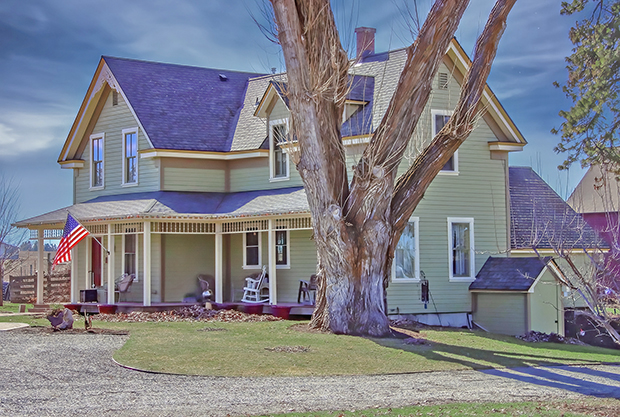
Built in 1895, the Palmer-Abbeal-Sprague Farmhouse & Barn holds special significance as the oldest surviving farmhouse existing on Orchard Prairie and together with the barn, remains a recognizable architectural landmark. Construction began on the property in 1891 and was completed in 1895 when the Palmer-Abbeal-Sprague Farmhouse was built by Eben Ephraim Palmer for his bride, Cynthia Jones Palmer. The simple 19th-century farmhouse is a tangible expression of the Folk Victorian style, and is a balloon-framed wood, two-story, gablefront-and-wing dwelling with a steeply pitched roof, inset wall dormers, wide cornice trim bands, corner boards, tall narrow original windows, wood clapboard drop siding, and a covered front porch located in the L formed by the gable-front-and-wing house plan. Eben & Cynthia Palmer homesteaded 160 acres, built the farmhouse, the barn (listed on the Washington State Heritage Barn Register), a cabbage shed, and planted and cultivated the land with a fruit/nut orchard, vegetables, and wheat fields. Their diligence and hard work to improve their land was rewarded when in 1896, Eben Palmer was awarded a Patent Deed for clear title and ownership of the acreage from the Federal Government of the United States of America, signed by President Grover Cleveland. The second owners of the farmhouse were Orchard Prairie farmers, John & Rebecca Abbeal. John Abbeal was a well-liked farmer and carpenter’s assistant who helped other farmers and who built several farmhouses on Orchard Prairie. His wife, Rebecca Sprague Abbeal, supplemented their farm income with a dress-making business which she operated from the Palmer-Abbeal-Sprague Farmhouse. Keeping the house in the family, Rebecca Sprague Abbeal’s nephew, John Henry Sprague, purchased the farmhouse and farmstead in 1938. Today in 2013, the property is owned by John Roderick Sprague, son of Rebecca Sprague Abbeal’s nephew. Through multiple generations, the Palmer, Abbeal, and Sprague families together rendered historical significance to the property through careful maintenance, preservation, and stewardship for more than 120 years.