Historic Properties of Spokane
Hutton Building
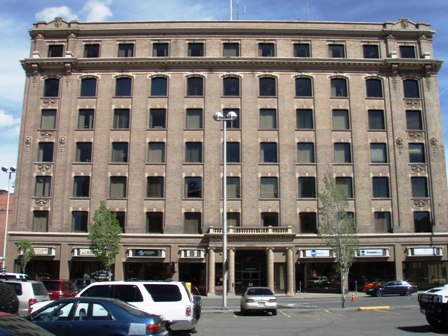
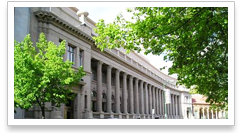
Built in 1907 and enlarged with three additional stories in 1910, the Hutton Building is a fine depiction of the Commercial style with Beaux Arts-style influence. The property towers over surrounding commercial business blocks as a prominent seven-story office building, brandishes its name in a front-entrance sandstone name panel that says, “HUTTON BUILDING,” and was constructed for Levi W. Hutton and his wife, May Arkwright Hutton, two of the most active politicists, civic benefactors, and social reformers to live in early 20th-century Spokane. Flush with millions of dollars from hard work and lucrative stakes in the famed Hercules Mine in Northern Idaho, the Huttons permanently relocated to Spokane where they built the Hutton Building in 1907, the Hutton House in 1914, and the Hutton Settlement in 1919, the later an award-winning progressive orphanage still modeled today. Levi & May Hutton embraced Spokane and became leaders in movements for political, social, and labor reform throughout the city and state. May Hutton was the first female candidate to run in the Idaho legislature in 1904, the first woman delegate to the Democratic National Convention in 1912, and was credited as one of the most influential women to spearhead the women’s suffrage movement in Washington. May Hutton’s efforts resulted in the right for women to vote in Washington State, and eventually led to the enactment of the 19th Amendment to the U.S. Constitution, guaranteeing voting rights for all women throughout the country. Levi & May Hutton lived in the fourth-floor penthouse of the Hutton Building from 1907 through 1914 during which time they headquartered their political, philanthropic, and reformation activities. They conferred with Susan B. Anthony and Dr. Anna Howard on suffrage issues and planned strategies with union organizers such as Samuel Gompers. John K. Dow was the principal designer of the four-story 1907 Hutton Building while Clarence Hubbell designed and supervised the building’s three-story addition in 1910.